The buffer is not our opinion. The State posts it on highway signs.
Drive Georgia's trout-water counties and you will pass the State's own notice — white sign, black letters, a statute number at the top. This page shows the actual sign, and offers free printable versions you can post along Mountaintown Creek, the Coosawattee River, or any Georgia stream bank.
The official State of Georgia sign
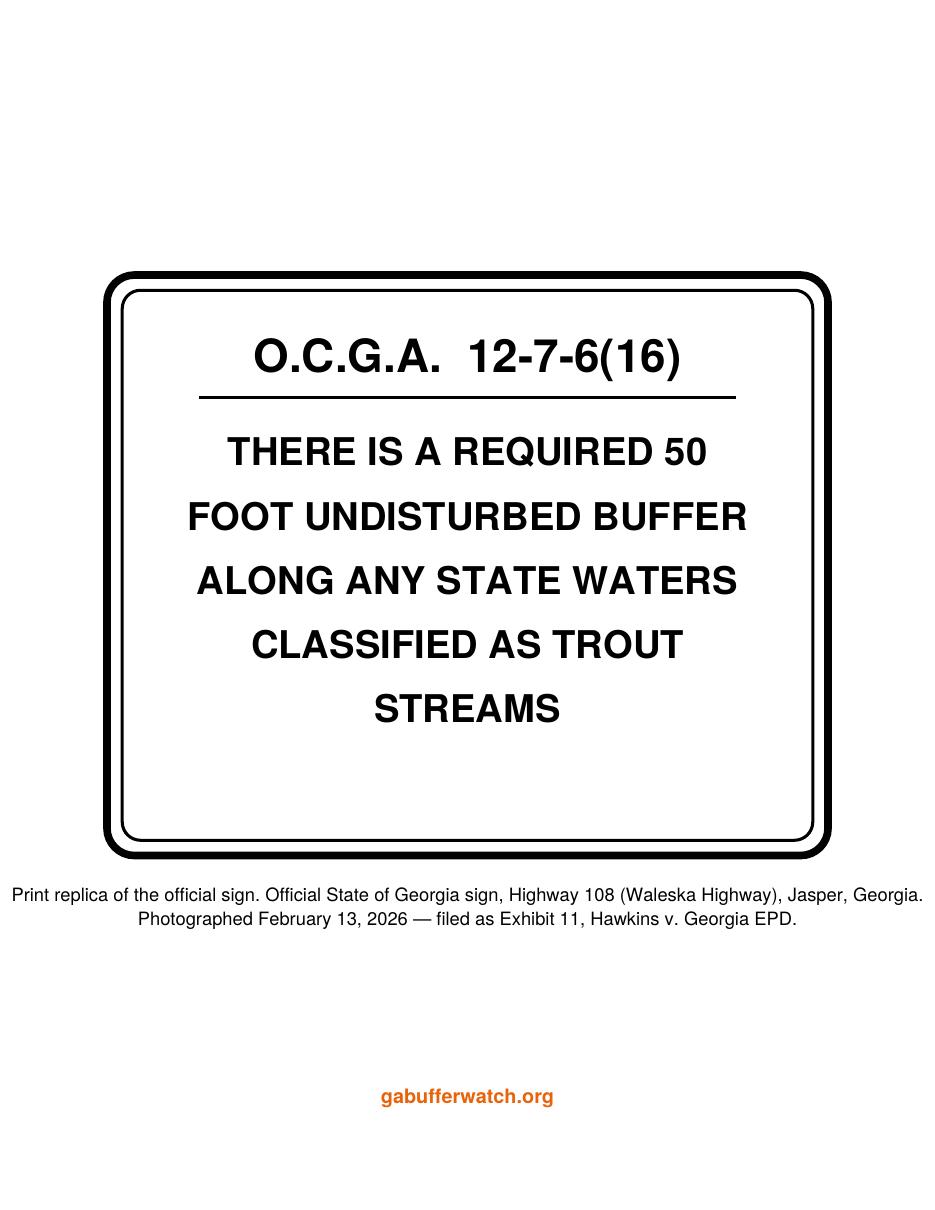
“O.C.G.A. 12-7-6(16) — THERE IS A REQUIRED 50 FOOT UNDISTURBED BUFFER ALONG ANY STATE WATERS CLASSIFIED AS TROUT STREAMS”
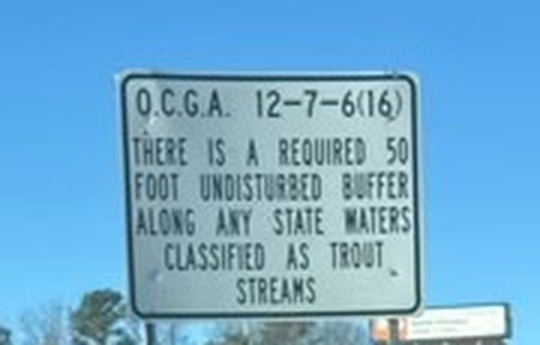
Gilmer County's trout streams — Mountaintown Creek among them — carry the same 50-foot requirement. The law does not change at the county line. What changes is whether anyone enforces it.
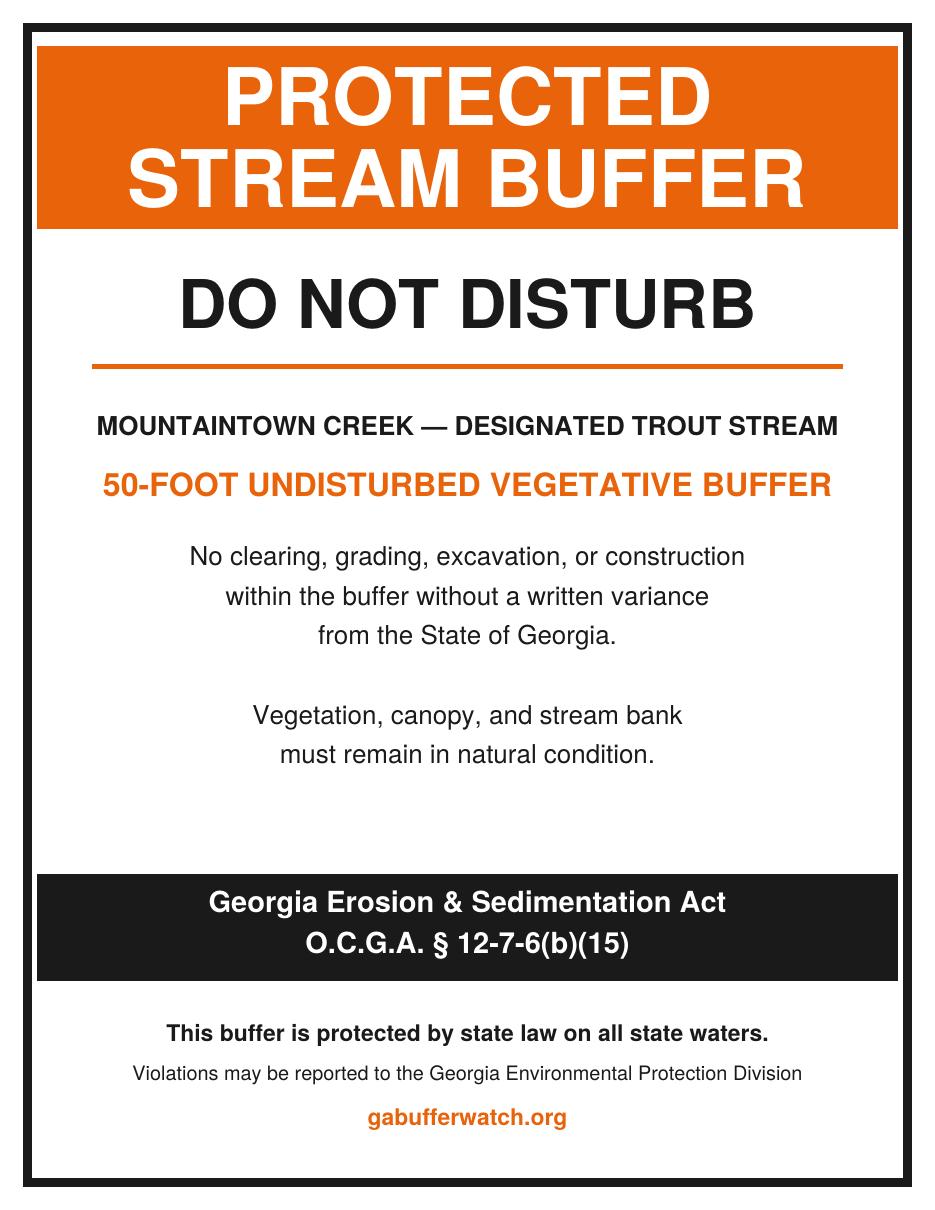
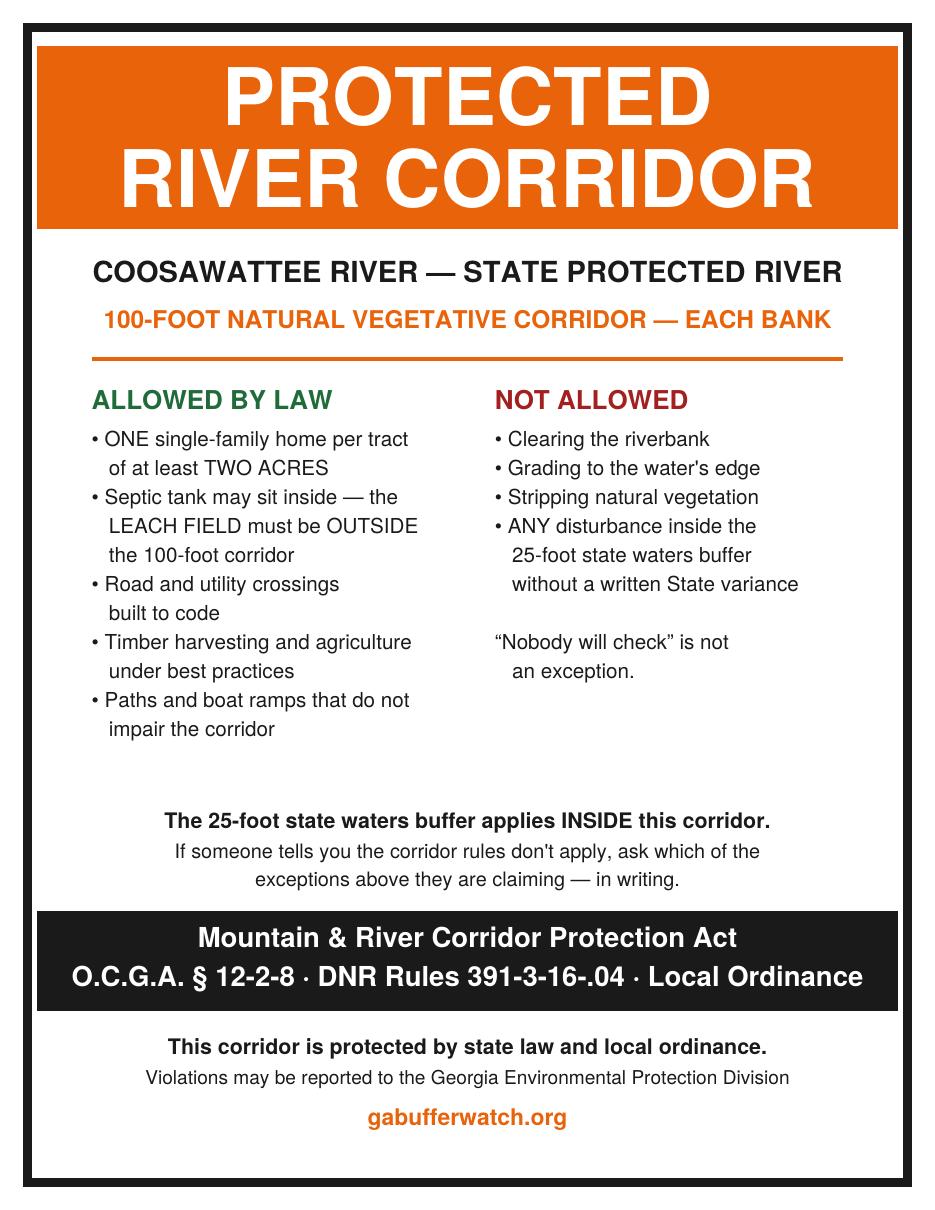
Printable buffer signs — free to download and post
Letter-size, high-contrast, ready to print and laminate. Post them where the buffer is — at the stream bank, along access roads, anywhere clearing has been threatened. Each cites the exact statute.
What the cited laws say
Trout streams — 50 feet. The Georgia Erosion & Sedimentation Act, O.C.G.A. § 12-7-6, requires an undisturbed vegetative buffer of 50 horizontal feet on both banks of any state waters classified as trout streams, and 25 feet on all other state waters. No land-disturbing activity within the buffer without a formal, publicly-noticed variance from the State.
The Coosawattee — 100 feet. Rivers with average annual flow of at least 400 cubic feet per second are protected rivers under O.C.G.A. § 12-2-8. DNR's River Corridor Protection criteria (Rules 391-3-16-.04) require a 100-foot natural vegetative buffer along each bank, implemented through local ordinance. Certain uses are allowed by law within the corridor — including one single-family dwelling per tract of at least two acres (the septic tank may sit within the corridor, but the leach field must be outside it), road and utility crossings built to code, timber and agriculture under best practices, and paths and boat ramps that do not impair the corridor. Clearing the bank is not among them.
See the full statute discussion and the State's own enforcement record on the main page.